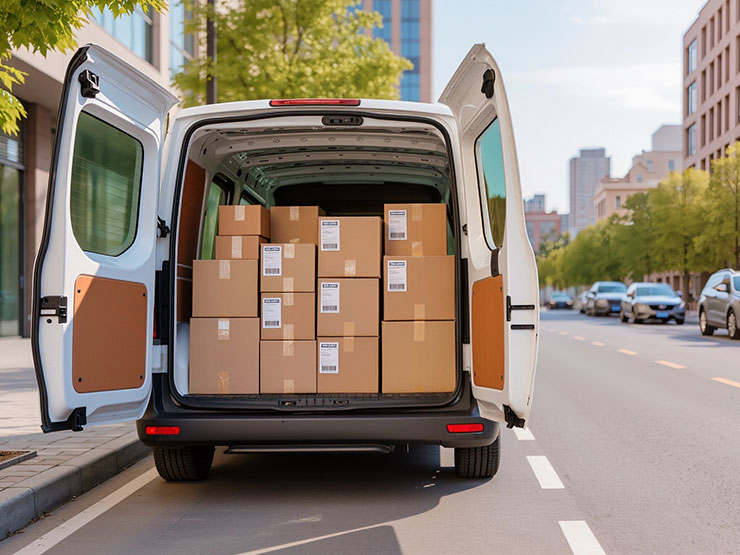
The blue Amazon Prime vans, the distinct FedEx trucks, and the colorful Fresh Direct vehicles are a constant presence on the streets of New York City. From the busy avenues of Manhattan to the residential roads of Queens, these delivery trucks are an essential part of modern city life.
While they bring us everything from packages to groceries, their sheer number and the pressure drivers face can lead to serious collisions. If you've been injured in one of the many delivery truck accidents in NYC, understanding your rights and what’s involved when pursuing compensation through an insurance claim is key. These incidents are often far more complicated than a typical car crash, involving large corporations and intricate questions about who is truly responsible.
Key Takeaways about Delivery Truck Accidents in NYC
- Accidents involving commercial delivery trucks from companies like Amazon, FedEx, or Fresh Direct present unique legal challenges compared to standard car accidents.
- Determining liability can be complex, potentially involving the driver, the parent company, a third-party contractor, or even a vehicle maintenance provider.
- Common causes for these accidents in New York City include pressure to meet tight delivery deadlines, driver distraction from scanners and GPS, and navigating congested urban environments.
- The rise of e-commerce has significantly increased the number of delivery vehicles on NYC roads, contributing to a higher potential for incidents with pedestrians, cyclists, and other drivers.
- Evidence such as electronic data from the truck, company records, and video footage can be crucial in establishing the details of a delivery truck accident case.
The E-Commerce Boom and Its Impact on NYC Streets
The convenience of one-day shipping and grocery delivery has fundamentally changed the landscape of New York City's roads. Every click to "buy now" adds another stop to a driver's route. According to the U.S. Census Bureau, e-commerce sales have seen a dramatic and steady increase over the past decade, a trend that translates directly to more delivery vehicles on our streets.
This surge in traffic creates a challenging environment. Imagine a delivery truck driver trying to navigate the narrow, one-way streets of Greenwich Village or double-parking on a busy Brooklyn thoroughfare during rush hour. They are often under immense pressure to meet strict delivery quotas, which can lead to hurried and sometimes unsafe decisions.
The constant stop-and-go, the search for parking, and the need to interact with handheld scanners all increase the chances of a mistake that could injure a pedestrian, cyclist, or another driver.
Common Causes of Delivery Truck Accidents in NYC
While every accident has a unique set of circumstances, collisions involving commercial delivery vehicles often stem from issues related to the pressures of the industry. These are not just simple driving errors; they can be symptoms of larger, systemic problems.
- Aggressive Driving and Speeding: To meet demanding schedules, drivers may exceed speed limits or make aggressive maneuvers, such as unsafe lane changes or failing to yield the right-of-way.
- Driver Fatigue: Long hours behind the wheel, sometimes starting early in the morning and ending late at night, can lead to exhaustion. A tired driver has slower reaction times and impaired judgment, which is dangerous in a dense urban environment.
- Distracted Driving: Delivery drivers rely on GPS devices, scanners, and communication tools to do their jobs. Unfortunately, using these devices while driving is a major form of distraction that can pull their attention away from the road.
- Inadequate Training: Companies have a responsibility to train their drivers on how to safely operate their vehicles, especially in a challenging environment like NYC. Insufficient training on defensive driving or handling a large vehicle can contribute to accidents.
- Improper Vehicle Maintenance: Delivery trucks log thousands of miles a year. If a company cuts corners on maintaining its fleet, issues like worn-out brakes or bald tires can lead to a catastrophic failure and a serious collision.
These factors combine to create a difficult situation on our city's roads, where the push for faster delivery can sometimes come at the cost of public safety.
Who Can Be Held Responsible in a Delivery Truck Accident?
One of the most complicated aspects of a delivery truck accident in NYC is figuring out who is legally responsible. It's often not as simple as just blaming the driver. Liability can extend to the powerful corporations that own the brands and set the delivery expectations.
The Driver's Role in a Delivery Truck Accident in NYC
The driver is the most direct link to the accident. If they were speeding, distracted, or otherwise driving negligently, they can be held personally responsible for their actions. A driver’s personal driving history and adherence to traffic laws, such as those outlined in the New York State Vehicle and Traffic Law, will be closely examined.
The Delivery Company's Responsibility (Amazon, FedEx, etc.)
In many cases, the company that employs the driver can also be held accountable. This is based on a legal principle called respondeat superior. In simple terms, this concept means an employer is responsible for the actions of an employee, as long as the employee was performing their job-related duties when the incident occurred.
Beyond this, a company could be found directly negligent for its own actions, such as:
- Negligent Hiring: Hiring drivers with poor driving records or a history of unsafe behavior.
- Insufficient Training: Failing to properly train drivers on company safety policies or how to operate the vehicle in urban conditions.
- Unrealistic Demands: Creating delivery schedules and quotas that implicitly encourage speeding and unsafe driving practices.
Holding a large corporation accountable requires a thorough investigation into its policies, training programs, and the specific demands placed on the driver involved in the collision.
Third-Party Liability
Sometimes, other parties may share some of the responsibility. For example, if a faulty part on the truck, like defective brakes, caused the accident, the vehicle or parts manufacturer could be liable. Similarly, if a separate company was responsible for maintaining the delivery truck and failed to do its job properly, that company could also be held accountable.
The Unique Case of Amazon Delivery Drivers
Amazon has created a complex delivery network that can make determining liability even more difficult. Many of the drivers in the familiar blue vans are not actually Amazon employees. Instead, they work for independent companies known as Delivery Service Partners (DSPs).
Amazon created this DSP program to contract with local entrepreneurs who then hire and manage their own teams of drivers. When an accident occurs, Amazon may try to argue that it is not responsible because the driver was employed by a separate DSP, not by Amazon directly. However, arguments can be made that Amazon still exerts significant control over the DSPs, dictating everything from the routes and delivery schedules to the uniforms drivers wear.
Investigating the precise relationship between Amazon, the DSP, and the driver is a critical part of handling these specific types of claims.
What to Do After a Collision with a Commercial Delivery Vehicle
The time following an accident can be stressful. Once you have received initial medical attention and are back home, it's important to be organized and methodical to protect your rights.
Here are some steps to consider:
- Preserve All Documentation: Keep a file with every document related to the incident. This includes the police report, the driver's information, medical bills, receipts for any related expenses, and any correspondence from insurance companies.
- Document Your Injuries and Recovery: Keep a simple journal detailing your physical pain, medical treatments, and how the injuries are affecting your daily life. This can be a valuable record of your experience.
- Be Cautious with Insurance Adjusters: The delivery company's insurance provider may contact you quickly. It's important to remember that their goal is to resolve the claim for the lowest possible amount. You are not obligated to give a recorded statement or accept an early settlement offer.
- Stay Off Social Media: Avoid posting details, photos, or opinions about the accident or your injuries online. Insurance companies often review social media profiles to find information they can use to challenge a claim.
Taking these careful steps can help you build a strong foundation for your recovery process.
Your Rights and Potential Compensation in New York
If you've been injured because of another party's negligence, you have the right to seek compensation for the harm you've suffered. In New York, this compensation, often called "damages," is intended to help you recover financially and acknowledge the non-economic impact of your injuries.
Potential compensation could cover a number of different areas:
- Medical Costs: This includes everything from the initial emergency room visit to ongoing physical therapy, future surgeries, and medication.
- Lost Income: If your injuries prevent you from working, you can seek compensation for the wages you have lost. If your ability to earn a living in the future is affected, you may also be compensated for that loss.
- Pain and Suffering: This addresses the physical pain and emotional distress caused by the accident and your injuries. New York has a "serious injury" threshold, as defined in N.Y. Ins. Law § 5102(d), which must be met to pursue compensation for pain and suffering in a motor vehicle accident case.
- Property Damage: This covers the cost of repairing or replacing your vehicle or any other personal property damaged in the collision.
It is also important to be aware of the state's time limits for filing a personal injury lawsuit. In New York, the statute of limitations for most personal injury claims is three years from the date of the accident. Acting in a timely manner is essential.
NYC Delivery Truck Accident FAQs
Here are answers to some common questions people have about collisions with commercial delivery trucks.
How does video footage from a nearby storefront or a dashcam help my case?
Video footage can be incredibly powerful evidence. It provides an unbiased account of how the accident happened, potentially showing which vehicle had the right-of-way, how fast the truck was going, or if the driver was distracted. It can help resolve disputes about the facts of the incident.
Do I still have a case if I was partially at fault for the accident?
Yes, you may still have a case. New York follows a "pure comparative negligence" rule. This means that if you are found to be partially at fault, you can still recover damages, but your compensation award will be reduced by your percentage of fault. For instance, if you were found to be 20% at fault, your total compensation would be reduced by 20%.
What's the difference between a claim against a FedEx truck versus a USPS truck?
Claims against United States Postal Service (USPS) trucks are different because the USPS is a federal agency. These claims are governed by the Federal Tort Claims Act (FTCA), which has its own strict rules and much shorter deadlines than a standard personal injury claim. It is a distinct process that requires specific procedures.
Are there different rules for accidents involving electric delivery vans or cargo bikes?
The same general principles of negligence apply regardless of the type of vehicle. However, the specific operational details and company policies for electric vans or cargo e-bikes may introduce new factors. For example, the quiet nature of electric vehicles or the rules governing e-bikes in bike lanes could be relevant details in an investigation.
Discuss Your Case with Greenberg Gross LLP
Being injured in a collision with a delivery truck can disrupt your life in countless ways. The legal process can seem complex. The attorneys at Greenberg Gross LLP have years of experience representing clients in high-stakes litigation and are dedicated to advocating for those who have been harmed.
We understand the challenges you are facing and are prepared to investigate every detail of your case to hold the responsible parties accountable. If you have been injured in a delivery truck accident in NYC, contact us today for a free, no-obligation consultation to discuss your situation and learn more about your legal options.