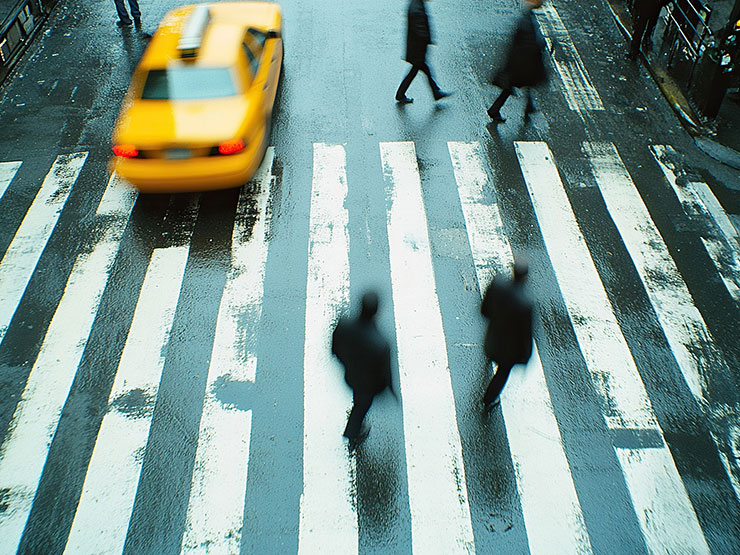
The rhythm of New York City is felt in its streets. From the fast-paced avenues of Manhattan to the neighborhood blocks in Queens, residents learn to move with the city’s unique pulse. Sometimes, this means crossing the street mid-block to catch a bus or beat the light. But what happens when this common practice leads to an accident?
If you were injured by a vehicle while crossing outside of a crosswalk, you might be worried that you have no options. The question of whether you can recover damages after jaywalking accidents in NYC is a critical one, and the answer is often yes, it is possible.
New York law recognizes that accidents are rarely 100% one person’s fault. A legal principle known as "comparative negligence" is used to look at the actions of everyone involved. This means that even if you were partially at fault for crossing the street improperly, you may still be able to seek compensation for your injuries. The key is determining how the responsibility for the accident is shared between you and the driver.
Key Takeaways about Damages in Jaywalking Accidents in NYC
- New York State operates under a "pure comparative negligence" rule, which allows an injured person to recover damages even if they are partially at fault for an accident.
- A pedestrian's financial recovery in a personal injury case may be reduced by their percentage of fault, but it is not automatically denied due to jaywalking.
- All drivers in New York City have a legal duty of care to remain alert and take reasonable steps to avoid colliding with pedestrians, regardless of where the pedestrian is crossing.
- The determination of fault involves examining various factors, including the driver's speed, attentiveness, and the specific circumstances of the incident.
Understanding "Jaywalking" and Pedestrian Rules in New York City
While "jaywalking" is a commonly used term, it generally refers to a pedestrian crossing a roadway in a way that violates local traffic regulations. In New York, the rules for pedestrians are outlined in the state's Vehicle and Traffic Law. The law provides guidance on where and when pedestrians should cross the street to promote safety for everyone.
According to New York Vehicle and Traffic Law (VTL) § 1152, pedestrians who cross a street at any point other than a marked crosswalk must yield the right-of-way to all vehicles. This means a pedestrian has a duty to wait for a safe gap in traffic before crossing. However, the law doesn't stop there. It also states that drivers must "exercise due care to avoid colliding with any pedestrian."
Here are a few key rules for pedestrians in NYC:
- At Crosswalks with Signals: Pedestrians must obey the "Walk" and "Don't Walk" signals. Crossing against the signal can be considered a form of negligence.
- At Unmarked Crosswalks: At intersections without traffic signals, drivers are generally required to yield to pedestrians in the crosswalk.
- Crossing Mid-Block: As mentioned, pedestrians must yield to vehicles. This is where most jaywalking accidents in NYC occur.
Of course, anyone who has spent time navigating the five boroughs knows that the written law and the daily practice of crossing the street can feel worlds apart. The flow of foot traffic often involves mid-block crossings, especially on long stretches of road or one-way streets. This reality is an important part of the context when evaluating what happened in an accident.
The Key Principle: New York's Pure Comparative Negligence Law
The single most important concept to understand in these cases is New York’s "pure comparative negligence" rule. This principle is a cornerstone of personal injury law in the state and directly addresses situations where more than one person may have contributed to an accident.
"Negligence" is a legal term that simply means someone failed to act with a reasonable level of care, and that failure caused harm to another person. For example, a driver texting while behind the wheel is acting negligently. "Comparative negligence" is the system used to compare the negligent actions of each person involved.
Under this system, an injured person's own fault does not prevent them from recovering damages. Instead, their potential compensation is simply reduced by their assigned percentage of fault.
Let's look at a clear example:
- A pedestrian crosses a busy street in Brooklyn mid-block at night while wearing dark clothing. A car, going 10 miles over the speed limit, strikes the pedestrian.
- After an investigation, a court determines that the pedestrian was 40% at fault for the accident because of their decision to cross in a dangerous spot.
- The driver is found to be 60% at fault for speeding and not paying close enough attention to the road ahead.
- If the pedestrian’s total damages (for medical bills, lost income, and pain) are calculated to be $100,000, they could still recover $60,000 (the total damages minus their 40% share of fault).
This system ensures that a negligent driver is still held accountable for the harm they caused, even if the injured pedestrian also made a mistake.
What Determines Fault in Jaywalking Accidents in NYC?
Because of the comparative negligence rule, the central issue in these cases becomes assigning percentages of fault. This is a detailed process that looks at every aspect of the incident. It isn't as simple as saying, "The pedestrian was jaywalking, so it's their fault." Instead, the focus is on what each person could and should have done differently to prevent the collision.
The Driver's Duty of Care
Drivers in a dense urban environment, like New York City, have a significant responsibility to be aware of their surroundings. The law expects them to anticipate the unexpected, including a person stepping out from between parked cars. A driver’s failure to exercise this "duty of care" is often a primary factor in jaywalking accidents in NYC.
Factors that can point to a driver's negligence include:
- Speeding: Driving faster than the posted speed limit reduces reaction time and increases the severity of an impact.
- Distracted Driving: A driver who is texting, talking on the phone, adjusting the radio, or using a navigation system is not fully focused on the road.
- Failure to Yield: Even if a pedestrian is not in a crosswalk, a driver who sees them or should have seen them has a responsibility to slow down or stop if possible.
- Driving Under the Influence: Operating a vehicle while impaired by alcohol or drugs is a serious form of negligence.
- Ignoring Conditions: A reasonable driver adjusts their speed and attentiveness for factors like rain, fog, heavy traffic, or the glare of the setting sun over the Hudson River.
Proving any of these behaviors can shift a significant portion of the fault onto the driver, opening the door for an injured pedestrian to recover damages.
The Pedestrian's Actions
The pedestrian's choices will also be closely examined. The goal is to determine if the pedestrian acted in a way that was reasonable under the circumstances. While jaywalking itself can be considered evidence of negligence, it's the context that truly matters.
Here are some actions that could increase a pedestrian’s share of fault:
- Darting into Traffic: Suddenly running into the street without giving drivers a chance to react is a high-risk behavior.
- Crossing a Highway: Attempting to cross a major thoroughfare like the BQE or FDR Drive on foot is extremely dangerous and would likely result in a high percentage of fault.
- Being Distracted: Walking while looking down at a phone or wearing noise-canceling headphones can reduce a pedestrian's awareness of their surroundings.
- Misjudging Traffic: Underestimating the speed of an approaching vehicle or the time needed to cross safely.
It's important to remember that these actions reduce, but do not necessarily eliminate, a potential claim thanks to New York's laws.
Other Contributing Factors
Sometimes, neither the driver nor the pedestrian is entirely to blame. External conditions can play a role in causing an accident and must be considered when determining fault. These might include malfunctioning traffic lights, a crosswalk signal that is not working properly, poor street lighting, a view obstructed by a poorly placed sign or overgrown trees, or hazardous road conditions like large potholes.

What Kind of Damages Can Be Recovered?
If you've been injured in a pedestrian accident, the financial and personal costs can mount quickly. A personal injury claim aims to provide compensation, known as "damages," for these losses. The damages you may be able to recover are generally grouped into two main categories.
- Economic Damages: These are the direct and verifiable financial losses you have suffered because of the accident. They include things like all past and future medical expenses, lost wages from being unable to work, and loss of future earning capacity if your injuries prevent you from returning to your job.
- Non-Economic Damages: These damages compensate you for the non-financial harm caused by the accident. This category covers your physical pain and suffering, emotional distress, and loss of enjoyment of life if your injuries stop you from participating in hobbies or activities you once loved.
Calculating these damages requires a thorough understanding of your injuries, your prognosis for recovery, and the overall impact the accident has had on your life.
Why a Legal Consultation Can Be Important
Figuring out fault and the value of a claim after one of the many jaywalking accidents in NYC can be complex. An attorney who handles personal injury cases can help you understand your legal options. Their role is to investigate the accident thoroughly, often uncovering evidence you might not be able to find on your own, such as traffic camera footage, vehicle "black box" data, or witness testimony.
A legal professional can build a case that demonstrates the driver's share of responsibility. They work with medical and financial professionals to accurately calculate the full extent of your damages, ensuring that future needs are considered. Their goal is to advocate on your behalf to secure the compensation you need to aid in your recovery.
NYC Jaywalking Accident FAQs
We’ve gathered some common questions that arise after a pedestrian accident in New York City.
What if the driver fled the scene after hitting me?
This is a hit-and-run, which is a serious crime. You may still be able to recover compensation through your own car insurance policy's "uninsured motorist" (UM) coverage, even though you were a pedestrian. If you do not have car insurance, you may be able to file a claim with New York's Motor Vehicle Accident Indemnification Corporation (MVAIC), an organization that provides coverage for those injured by uninsured or unidentified drivers.
Is there a time limit to file a claim for a pedestrian accident in New York?
Yes, this time limit is called the statute of limitations. In New York, you generally have three years from the date of the accident to file a personal injury lawsuit. However, if your claim is against a government entity, such as the City of New York (for example, if you were hit by an MTA bus), the deadlines are much shorter. You must typically file a "notice of claim" within 90 days.
Does my own health insurance cover my initial medical bills?
Yes, your health insurance can be used to pay for your initial medical treatment. New York is also a "no-fault" state for car accidents, which means that the insurance policy of the vehicle that hit you may be responsible for paying your initial medical bills and lost wages up to a certain limit, regardless of who was at fault. This is separate from a personal injury claim for pain and suffering.
The driver’s insurance company offered me a quick settlement. Should I take it?
It is wise to be very cautious about early settlement offers. Insurance companies often try to settle claims quickly for a low amount before the injured person understands the full extent of their injuries or future medical needs. Once you accept a settlement, you cannot ask for more money later, even if your condition worsens. It is often beneficial to discuss any offer with a legal professional before accepting.
Contact a Personal Injury Attorney
If you or a loved one has been injured in a pedestrian accident, you are likely facing physical, emotional, and financial challenges. At Greenberg Gross LLP, our team of trial lawyers is dedicated to representing clients in their most significant matters. We understand the complexities of personal injury law in New York and are committed to holding negligent parties accountable.
Our firm was built on a sense of mission to provide the highest level of legal representation. We fight for our clients, working to achieve extraordinary results both at the negotiating table and in the courtroom. While our reputation for winning at trial often encourages opponents to settle, we are always prepared to take a case as far as it needs to go to seek justice for you. Contact us for a free consultation to discuss the details of your case and learn how we can help.