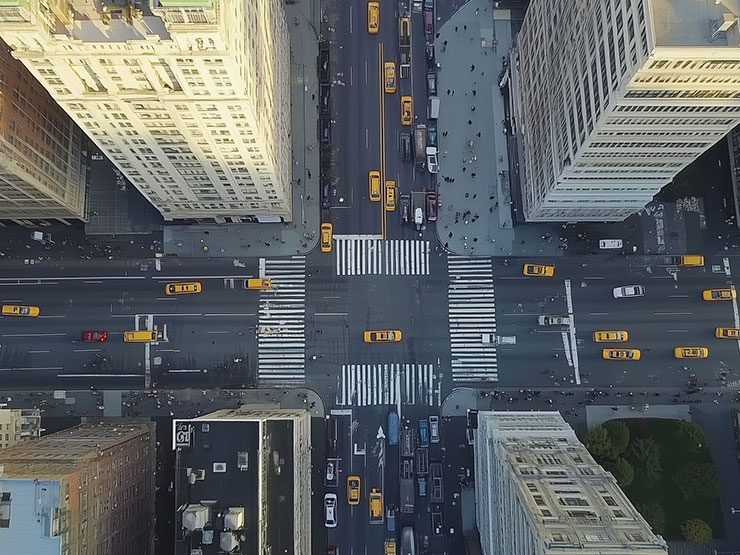
Traveling along the streets of New York City, whether by foot, bike, or car, is a unique experience. While the city's energy is one of its greatest assets, it also contributes to a high volume of traffic that can, unfortunately, lead to collisions. Certain crossroads and junctions across the five boroughs have shown a consistent pattern of accidents, making it important for all residents and visitors to be aware of NYC's most dangerous intersections for accidents.
Key Takeaways about the Most Dangerous Intersections for Accidents in NYC
- Certain intersections in New York City have a higher frequency of vehicle, pedestrian, and cyclist collisions due to factors like high traffic volume, complex designs, and poor visibility.
- Data from city agencies helps identify specific accident hotspots in Manhattan, Brooklyn, Queens, The Bronx, and Staten Island.
- Common accidents at these junctions include side-impact (T-bone) collisions, pedestrian knockdowns, and bicycle-related incidents.
- New York's "no-fault" insurance system plays a significant role in how medical expenses and lost wages are handled after a crash.
- Documenting everything after an accident, from the scene to medical care, is a critical step for anyone involved in a collision.
Why Are Some NYC Intersections More Prone to Collisions?
Not all intersections are created equal. While any street corner can be the site of an accident, some have a combination of factors that make them consistently more hazardous. From the chaotic crossroads near Times Square to the sprawling avenues in Queens, specific characteristics can increase the risk of a collision.
Several key elements contribute to making an intersection particularly challenging:
- High Traffic Volume: Intersections that handle a massive flow of vehicles, pedestrians, and cyclists naturally have more opportunities for conflict. This is especially true in commercial hubs or areas near major bridges and tunnels.
- Complex Road Design: Junctions with more than four crossing points, multiple turning lanes, bus lanes, and bike lanes can be confusing for drivers. Angled streets or intersections that don't meet at a perfect 90-degree angle can also create blind spots and reduce reaction time.
- Poor Visibility: Obstructions like large signs, utility poles, construction scaffolding, or even poorly placed trees can block a driver's or pedestrian's line of sight. Hills, curves leading into an intersection, and the shadows cast by tall buildings like those in the Financial District can also play a role.
These factors often work together, creating a situation where a moment's hesitation or a simple misjudgment can have serious consequences.
Identifying NYC's Most Dangerous Intersections for Accidents
Using publicly available data from sources like the NYPD and the NYC Department of Transportation, it is possible to identify areas with a high concentration of reported crashes. This information is a crucial part of city-wide initiatives like Vision Zero, a strategy to eliminate all traffic fatalities and severe injuries.
While the list of dangerous intersections can change from year to year, some locations consistently appear as hotspots.
Dangerous Intersections in Manhattan
Manhattan's grid is famous, but its density and the sheer number of people create immense challenges. Many of its most difficult intersections are located in Midtown, where tourist traffic mixes with commuters and commercial vehicles.
- Canal Street and Bowery: This intersection is a convergence point for traffic coming off the Manhattan Bridge and is notorious for its congestion. The mix of vehicles, cyclists using the bridge path, and pedestrians exploring Chinatown and SoHo makes it a perennial trouble spot.
- Tenth Avenue and W 42nd Street: Located near the Port Authority Bus Terminal and the entrance to the Lincoln Tunnel, this area is a constant hub of activity. Buses, taxis, and private vehicles create a complex flow that demands extreme caution.
- Delancey Street and Essex Street: Serving as a major artery to the Williamsburg Bridge, Delancey Street is wide and busy. The intersection with Essex Street sees heavy vehicle and pedestrian traffic, particularly with the nearby Essex Market drawing crowds.
Being mindful of the unique traffic patterns in these and other busy Manhattan locations is key for anyone traveling through the borough.
Accident Hotspots in Brooklyn
As Brooklyn's population has grown, so has the strain on its infrastructure. Major thoroughfares that connect neighborhoods and lead to Manhattan are often the site of frequent accidents.
- Tillary Street and Flatbush Avenue: This complex intersection near the entrance to the Brooklyn and Manhattan Bridges is one of the city's most frequently cited danger zones. Multiple lanes merge and diverge, creating a confusing environment for drivers and putting pedestrians and cyclists at risk.
- Atlantic Avenue and Bedford Avenue: Atlantic Avenue is one of Brooklyn's main east-west corridors. Its intersection with another major street, Bedford Avenue, near landmarks like the Barclays Center, handles a huge volume of traffic and has a high rate of collisions.
- Neptune Avenue and Cropsey Avenue: Located in Coney Island, this intersection is known for high speeds and has been the site of numerous serious accidents. The wide lanes can sometimes encourage drivers to go faster than is safe for the conditions.
These examples highlight how Brooklyn's combination of major arteries and dense residential neighborhoods creates specific traffic safety challenges.
Key Intersections to Be Cautious of in Queens
Queens is the city's largest borough by area, and its road network includes major highways and long, wide boulevards that can contribute to speeding and serious accidents.
- Queens Boulevard and 58th Street: For decades, Queens Boulevard was known for its high number of pedestrian fatalities. While safety improvements have been made, its width and the number of lanes still make its intersections, like the one at 58th Street in Woodside, places where caution is essential.
- Rockaway Boulevard and Sutphin Boulevard: Situated in a busy area of South Jamaica, this intersection sees heavy traffic, including many vehicles headed toward JFK Airport. It is a known hotspot for collisions.
- Northern Boulevard and 41st Avenue: Northern Boulevard is another of the borough's primary thoroughfares. High traffic volumes and numerous businesses along the route lead to frequent stops and turns, increasing the potential for accidents at key crossings.
Understanding the unique character of Queens' major roadways can help residents and visitors alike remain more aware of their surroundings.
What Types of Accidents Happen at These Intersections?
The design and traffic patterns of an intersection often influence the kind of collisions that occur there. At these dangerous NYC intersections, certain types of incidents are more common.
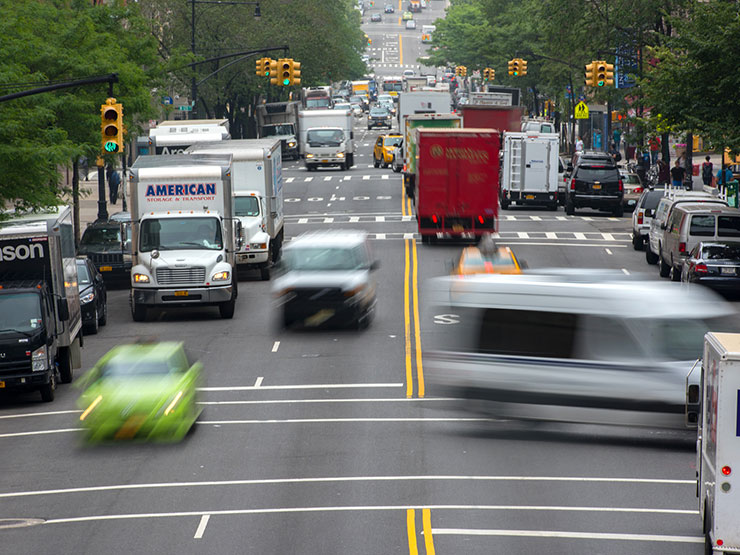
- Pedestrian Knockdowns: With millions of New Yorkers walking as their primary mode of transportation, pedestrians are especially vulnerable at busy intersections, particularly when vehicles are making turns.
- Bicycle Accidents: Cyclists often have to contend with vehicles turning into their path, car doors opening, and a lack of protected bike lanes at complex junctions.
- T-Bone (Side-Impact) Collisions: These frequently happen when a driver runs a red light or stop sign, striking the side of a vehicle that has the right-of-way. They are often severe due to the limited protection on the sides of a car.
- Rear-End Collisions: In the stop-and-go traffic common at congested city intersections, rear-end accidents are frequent. Sudden stops can easily catch a distracted or tailgating driver by surprise.
Each of these accident types can result in significant injuries and property damage, affecting the lives of those involved.
Understanding Your Rights and Next Steps After an Intersection Accident
If you've been involved in a collision, the period that follows can feel confusing. Once you have addressed any immediate medical needs, taking a few organized steps can help protect your rights and prepare you for what comes next. The focus should be on recovery and gathering the necessary information.
The Importance of Documentation
Creating a clear record of the accident and its consequences is one of the most helpful things you can do. This information provides a factual basis for insurance claims and any other processes that may follow.
- Preserve the Police Report: Always obtain a copy of the official police report. It contains the officer's observations, witness statements, and often an initial assessment of how the accident occurred.
- Keep Medical Records: Maintain a file of every doctor's visit, medical bill, prescription, and therapy session related to your injuries. This creates a clear timeline of your treatment and expenses.
- Track Lost Wages: If your injuries prevent you from working, keep detailed records of the days you missed and the income you lost. A letter from your employer can help substantiate this.
This collection of documents helps paint a full picture of the incident's impact on your health and finances.
Dealing with Insurance Companies
New York operates under a "no-fault" car insurance system. This means that after a car accident, your own auto insurance policy's Personal Injury Protection (PIP) coverage is the primary source for paying your medical bills and a portion of your lost wages, regardless of who caused the collision. According to the New York State Department of Financial Services, you must file a no-fault claim with your own insurer within 30 days of the accident.
However, the no-fault system has limits. It does not cover pain and suffering. You may be able to step outside the no-fault system and file a claim against the at-fault driver if you have sustained what the law defines as a "serious injury."
Understanding negligence is key to this process. Negligence is a legal term that means someone failed to act with a reasonable level of care, and that failure caused harm to another person. In a car accident, this could be anything from running a red light to texting while driving. Proving that another party's negligence caused your serious injuries is central to seeking compensation for damages beyond what no-fault insurance provides.
NYC's Most Dangerous Intersections FAQs
Here are answers to some common questions people have about traffic accidents at challenging New York City intersections.
What is the "right of way" and how does it work at NYC intersections?
The right of way is a set of rules that determines who should proceed first in a traffic situation to avoid a collision. For example, under New York Vehicle and Traffic Law, a driver intending to turn left must yield to any vehicle approaching from the opposite direction. Pedestrians in a crosswalk with a "Walk" signal generally have the right of way. However, every person on the road has a duty to see what there is to be seen and to exercise due care to avoid a collision.
What if I was a tourist injured in an accident at an NYC intersection?
The same general principles of negligence and insurance coverage apply whether you are a resident or a visitor. Your immediate medical care would be addressed first. The process of filing insurance claims can be more complex, especially if your own auto insurance is from out of state, but your right to seek accountability from a negligent party remains the same.
How does the Vision Zero program affect these dangerous intersections?
Vision Zero is a city-wide initiative aimed at eliminating traffic fatalities. The program uses data to identify high-crash corridors and intersections and implements safety improvements. These can include redesigning streets, adding protected bike lanes, lowering speed limits, and increasing enforcement of traffic laws. The goal is to re-engineer dangerous spots to make them safer for everyone.
Can I still seek compensation if I was partially at fault for the accident?
New York follows a "pure comparative negligence" rule. This means you can still recover damages even if you were partially responsible for the accident. However, the amount of compensation you receive will be reduced by your percentage of fault. For instance, if you were found to be 20% at fault, your total compensation award would be reduced by 20%.
Are traffic camera videos used to determine fault in a collision?
Red light cameras are used to issue tickets to vehicle owners for running a red light, but the footage is not always saved or accessible for civil cases. However, if there is video from a nearby business's security camera, a dashcam, or a city-owned surveillance camera, it can be powerful evidence. Obtaining this footage often requires swift action before it is erased.

Contact a Dedicated Legal Team
Dealing with the consequences of an accident can be a challenging experience. You may have questions about medical bills, lost income, and what your options are for holding a negligent party accountable. Having a dedicated legal advocate on your side can provide clarity and support.
The attorneys at Greenberg Gross LLP have years of experience representing clients in personal injury matters. We are committed to helping you understand your rights and pursuing the compensation you need to move forward. If you were injured in a collision, we invite you to reach out for a free consultation to discuss your case.