Brooklyn-Queens Expressway (BQE) Accidents: What You Need to Know
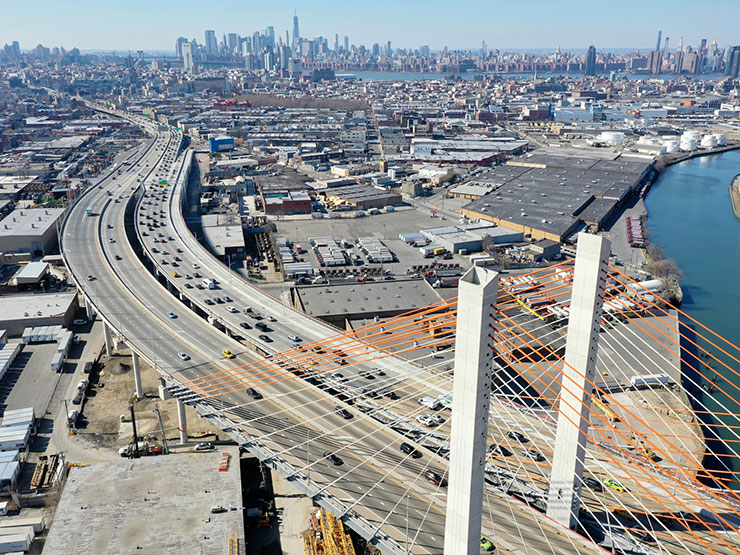
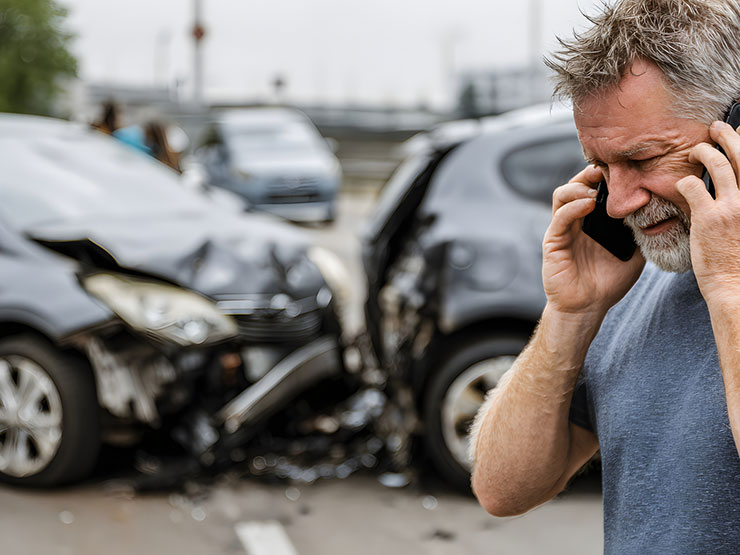
Driving on the Brooklyn-Queens Expressway, known to every New Yorker as the BQE, is a unique experience. From the tight lanes of the triple cantilever hanging over Brooklyn Heights to the constant flow of traffic heading toward the Kosciuszko Bridge, it demands a driver’s full attention. When that daily commute is suddenly interrupted by a collision, the moments that follow can be confusing and stressful.
If you have been involved in one of the many Brooklyn-Queens Expressway (BQE) accidents that occur each year, it’s important to know that you have rights and that there are steps you can take to protect your well-being. The path to recovery can feel complicated, but you have options for seeking accountability and the resources you need to heal.
After a BQE car crash, a person’s immediate priorities from home should be seeking medical attention and documenting everything related to the incident.
New York’s “no-fault” insurance system covers initial medical expenses and lost wages, but a personal injury lawsuit may be possible if a “serious injury” threshold is met.
The state’s pure comparative negligence rule allows individuals to seek compensation even if they are partially at fault for an accident, with their award reduced by their percentage of fault.
Multiple parties, including other drivers, trucking companies, or even government entities, could be held responsible for a BQE accident depending on the circumstances.
A strict legal deadline, known as the statute of limitations, applies to filing a personal injury claim in New York.
Why Do So Many Accidents Happen on the BQE?
The BQE is one of New York City’s most critical and congested arteries, and its design presents a number of challenges for drivers. Many factors contribute to the high rate of Brooklyn-Queens Expressway accidents, from its aging infrastructure to the sheer volume of vehicles it carries daily. Understanding these common causes can help contextualize what may have happened in your own situation.
Several distinct features of the expressway create hazardous conditions:
Constant Congestion and Sudden Stops: The BQE is notorious for bumper-to-bumper traffic, especially during rush hour. This constant stop-and-go environment frequently leads to rear-end collisions when drivers are distracted or following too closely.
Aging Infrastructure and Construction: Sections of the BQE are decades old and in a state of near-constant repair. Uneven pavement, potholes, narrow lanes, and confusing construction zone patterns create unpredictable driving conditions that can easily lead to a loss of vehicle control.
Aggressive Driving: The pressure of NYC traffic often brings out impatient and aggressive behaviors. Speeding, unsafe lane changes, and tailgating are common sights on the BQE and are major contributors to serious crashes.
Complex Merges and Short Ramps: Many of the on-ramps and off-ramps along the BQE are short, forcing drivers to merge quickly into fast-moving traffic. This is particularly dangerous near major interchanges like the Gowanus Expressway or the Long Island Expressway.
These factors combine to create a challenging environment where even the most careful driver can be involved in a collision caused by another’s choices.
What to Do After a BQE Crash
After an accident, the actions you take in the following days and weeks are critical for both your health and any potential future claim. This period is about focusing on your recovery and methodically organizing the information related to the incident.
Prioritizing Your Health and Well-being
Your physical and mental health is the most important priority. Even if you felt fine at the scene, some serious injuries may not show symptoms for hours or even days.
Conditions like whiplash, soft tissue damage, internal injuries, or traumatic brain injuries can have delayed onsets. Seeing a doctor for a full evaluation creates an official medical record of your injuries, which is vital. Follow all of your doctor’s treatment recommendations, attend follow-up appointments, and keep a simple journal detailing your symptoms, pain levels, and how the injuries are impacting your daily life.
Gathering and Organizing Important Documents for Brooklyn-Queens Expressway (BQE) Accidents
Documentation is the foundation of a personal injury claim. Keeping everything organized from the start will make the process much smoother. Start a file and begin collecting key pieces of information.
Police Accident Report: You can typically obtain a copy of your report from the NYPD precinct that responded to the call. This report contains the officer’s initial observations, witness information, and sometimes a preliminary assessment of fault.
Photos and Videos: If you were able to take pictures of the vehicle damage, your injuries, and the accident scene, keep them saved in a secure place. These visuals can provide powerful context.
Witness Information: If anyone saw the accident and gave you their contact information, make sure it is written down clearly and stored with your other documents.
Medical Records and Bills: Keep every bill, receipt, prescription information, and doctor’s note related to your treatment. This includes costs for emergency room visits, physical therapy, medication, and any other medical care.
Proof of Lost Income: Obtain a letter from your employer detailing your regular pay rate, your job title, and the dates you were unable to work due to your injuries. Keep copies of your pay stubs as well.
Having these documents in one place provides a clear and comprehensive picture of the financial and physical effects of the Brooklyn-Queens Expressway accident.
Understanding New York’s Car Accident Laws
The legal framework for car accidents in New York is different from many other states. Two key concepts—the “no-fault” system and “comparative negligence”—play a major role in how you can seek compensation.
New York’s “No-Fault” Insurance System
New York operates under a system known as “no-fault” insurance. In simple terms, this means that after a car accident, your own auto insurance policy is responsible for paying for your initial economic losses, regardless of who caused the crash. These benefits, often called Personal Injury Protection (PIP), are designed to get you quick payment for certain expenses.
In New York, no-fault benefits typically cover:
Necessary medical and rehabilitation expenses.
A percentage of your lost earnings, up to a certain monthly maximum.
A small daily amount for other reasonable and necessary expenses.
This system is intended to reduce lawsuits for minor accidents, but it has important limitations and does not cover vehicle damage or non-economic losses like pain and suffering.
When Can You Step Outside the No-Fault System?
You can pursue a personal injury lawsuit against the at-fault driver only if your injuries meet the state’s “serious injury” threshold. This is a critical legal standard that allows you to seek compensation beyond what your own no-fault insurance provides, including money for pain and suffering.
Under New York Insurance Law, a serious injury can be defined in several ways, including:
Death
Dismemberment or significant disfigurement
A fracture
Loss of a fetus
Permanent loss of use of a body organ, member, function, or system
Permanent consequential limitation of use of a body organ or member
Significant limitation of use of a body function or system
A medically determined injury or impairment of a non-permanent nature which prevents the injured person from performing substantially all of the material acts which constitute such person’s usual and customary daily activities for not less than ninety days during the one hundred eighty days immediately following the occurrence of the injury or impairment.
If your injury qualifies under this statute, you have the right to hold the negligent driver fully accountable for all of your losses.
The Concept of Comparative Negligence
New York follows a “pure comparative negligence” rule. This legal doctrine means that you can still recover damages even if you were partially to blame for the BQE accident. However, the amount of compensation you receive will be reduced by your assigned percentage of fault.
For example, if a court determines your total damages are $100,000 but finds that you were 10% responsible for the collision (perhaps for being slightly over the speed limit), your final award would be reduced by 10%, leaving you with $90,000. This rule ensures that responsibility is divided fairly based on each party’s contribution to the incident.
Building a Case for Compensation After a BQE Collision
To successfully step outside the no-fault system and hold another party accountable, you must establish that their negligence was the cause of your serious injuries. Negligence is a legal term that means someone failed to act with reasonable care, and that failure resulted in harm to another person. Proving it involves demonstrating four key elements: duty, breach, causation, and damages.
Who Could Be Held Responsible for a Brooklyn-Queens Expressway Accident?
While it is often another driver who is at fault, they are not the only party that could bear responsibility for a crash on the BQE. A thorough investigation may reveal that other entities contributed to the circumstances that led to your injuries.
Potential responsible parties could include:
The Driver of Another Vehicle: This is the most common scenario, involving a driver who was speeding, distracted, intoxicated, or otherwise driving recklessly.
A Commercial Trucking Company: If you were hit by a commercial truck, both the driver and their employer could be held accountable. The company is responsible for proper hiring, training, and vehicle maintenance.
A Government Entity: In some cases, a city or state agency could be responsible if a dangerous road condition, like a massive pothole or poorly designed construction zone, directly caused the accident.
A Vehicle Manufacturer: If a defective part, such as faulty brakes or a malfunctioning airbag, contributed to the crash or the severity of your injuries, the car or parts manufacturer could be held liable.
Identifying all potential sources of accountability is a key step in ensuring you can seek the full compensation you deserve.
Types of Compensation You May Be Entitled To
If you have a qualifying serious injury, you can seek financial recovery for a wide range of losses, which are typically broken down into two categories: economic and non-economic damages.
Economic damages are for tangible, calculable financial losses, such as:
All past and future medical bills
Lost wages and diminished future earning capacity
Costs of rehabilitation and physical therapy
Out-of-pocket expenses for things like medication or assistive devices
Non-economic damages are for intangible, personal losses that do not have a specific price tag, including:
Pain and suffering
Emotional distress and mental anguish
Loss of enjoyment of life
Permanent scarring or disfigurement
Calculating the full value of these damages requires a careful analysis of your medical records, financial documents, and the overall impact the injuries have had on your life.
The Statute of Limitations for Car Accidents in New York
It is crucial to understand that you have a limited amount of time to take legal action after a car accident. This deadline is called the statute of limitations. In New York, the general statute of limitations for filing a personal injury lawsuit is three years from the date of the accident.
If you fail to file your lawsuit within this three-year window, the court will likely dismiss your case, and you will lose your right to seek compensation forever. While there are some very rare exceptions, this deadline is strictly enforced.
It is also important to note that if your claim involves a government entity, the deadlines are much shorter and require filing a formal notice of claim, often within just 90 days of the incident. Acting promptly is essential to protecting your legal rights.
Brooklyn-Queens Expressway Accident FAQs
Here are answers to some common questions people have after a collision on the BQE.
What if the driver who hit me was uninsured or underinsured?
If the at-fault driver has no insurance or not enough to cover your damages, you may be able to make a claim through your own insurance policy’s Supplementary Uninsured/Underinsured Motorist (SUM) coverage. This is a required offering on all New York auto policies and is designed to protect you in these exact situations.
How does the ongoing BQE construction project affect my accident claim?
BQE construction can make the case more complex. If the accident was caused by poor signage, a hazardous lane shift, or debris left by a construction crew, the company managing the project or a government agency could potentially be held partially or fully responsible. This requires a detailed investigation to determine if the construction zone failed to meet safety standards.
Should I accept the first settlement offer from the insurance company?
It is often wise to be cautious about accepting the first offer from an insurance company. Initial offers are frequently lower than the full value of a claim and may not account for future medical needs or the full extent of your pain and suffering. It is generally beneficial to have any offer reviewed by a legal professional before you agree to it or sign any documents.
What happens if I was a passenger in a rideshare vehicle like Uber or Lyft during the BQE accident?
As a passenger, you are not at fault. You can typically file a claim through the no-fault insurance of the vehicle you were in. If your injuries are serious, you may be able to file a claim against the at-fault driver’s insurance. Rideshare companies also carry large insurance policies that can come into play, especially if their driver was responsible for the crash.
Can I still file a claim if the police report says I was partially at fault?
Yes. A police report is an officer’s opinion and is not the final word on liability. Furthermore, because of New York’s pure comparative negligence rule, you can still seek compensation even if you are found to be partially at fault. An investigation may show that the other party bears a much larger share of the responsibility than the police report initially suggests.
Find Out How a Personal Injury Attorney Can Help
Recovering from a serious crash on the BQE involves focusing on your health, understanding your legal rights, and pursuing the financial resources you need to move forward. The process can be complicated, but a consultation with a qualified trial attorney can provide clarity on your options and help you make informed decisions.
The dedicated attorneys at Greenberg Gross LLP have a history of representing clients in their most significant matters. We fight for accountability and work to help you secure the resources you need for your recovery. If you were injured in a Brooklyn-Queens Expressway accident, contact us today for a free, confidential consultation to discuss your case.
To provide the best experiences, we use technologies like cookies to store and/or access device information. Consenting to these technologies will allow us to process data such as browsing behavior or unique IDs on this site. Not consenting or withdrawing consent, may adversely affect certain features and functions.
Functional
Always active
The technical storage or access is strictly necessary for the legitimate purpose of enabling the use of a specific service explicitly requested by the subscriber or user, or for the sole purpose of carrying out the transmission of a communication over an electronic communications network.
Preferences
The technical storage or access is necessary for the legitimate purpose of storing preferences that are not requested by the subscriber or user.
Statistics
The technical storage or access that is used exclusively for statistical purposes.The technical storage or access that is used exclusively for anonymous statistical purposes. Without a subpoena, voluntary compliance on the part of your Internet Service Provider, or additional records from a third party, information stored or retrieved for this purpose alone cannot usually be used to identify you.
Marketing
The technical storage or access is required to create user profiles to send advertising, or to track the user on a website or across several websites for similar marketing purposes.